Written By:
Sinéad SmythUpdated on:

Stand at the most northerly point of Ireland
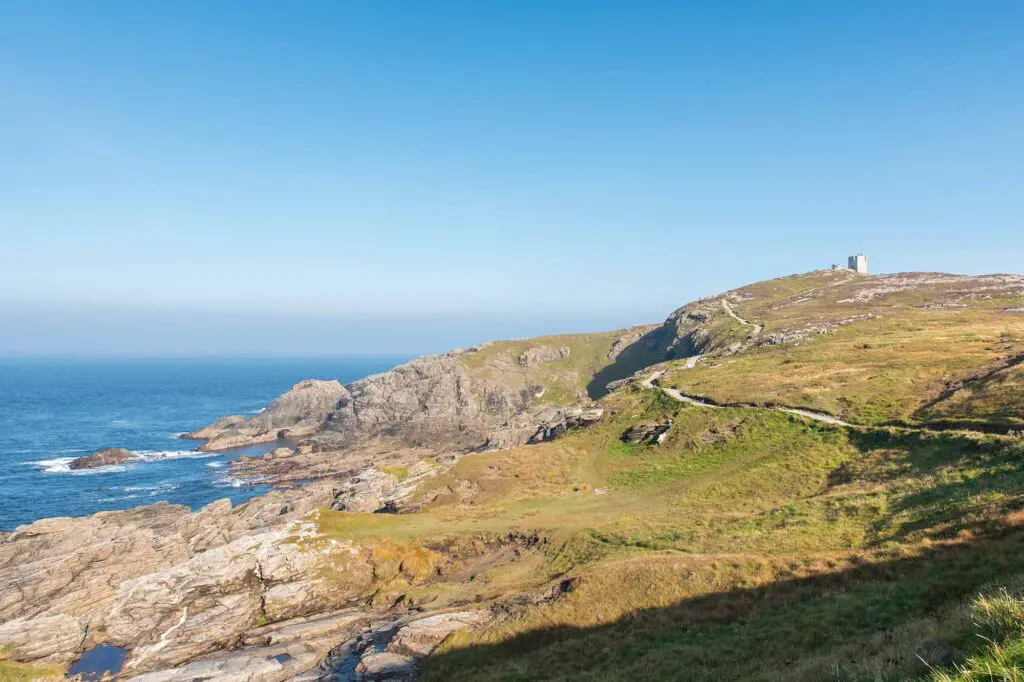
View all placesAt the very tip of the Inishowen Peninsula, where land gives way to the endless Atlantic, Banba’s Crown marks the northernmost point of Ireland. Exposed to the wind, surrounded by sea, and steeped in history, it’s a place where geography, mythology, and memory converge.
Whether you’re drawn by the view, the legend, or the simple fact of standing as far north as Ireland allows, this headland offers a powerful sense of place.
Banba’s Crown takes its name from Banba, one of the mythical queens of Ireland, said to have set foot here long before written history. Alongside her sisters Ériu and Fódla, Banba is part of a triad of female figures invoked in early Irish lore to represent the land itself. The name gives the site a timeless resonance — a connection to Ireland’s oldest stories and the enduring presence of the land.
While little remains of the early structures, ruins and traces of stonework near the headland suggest this site held significance long before modern history arrived.
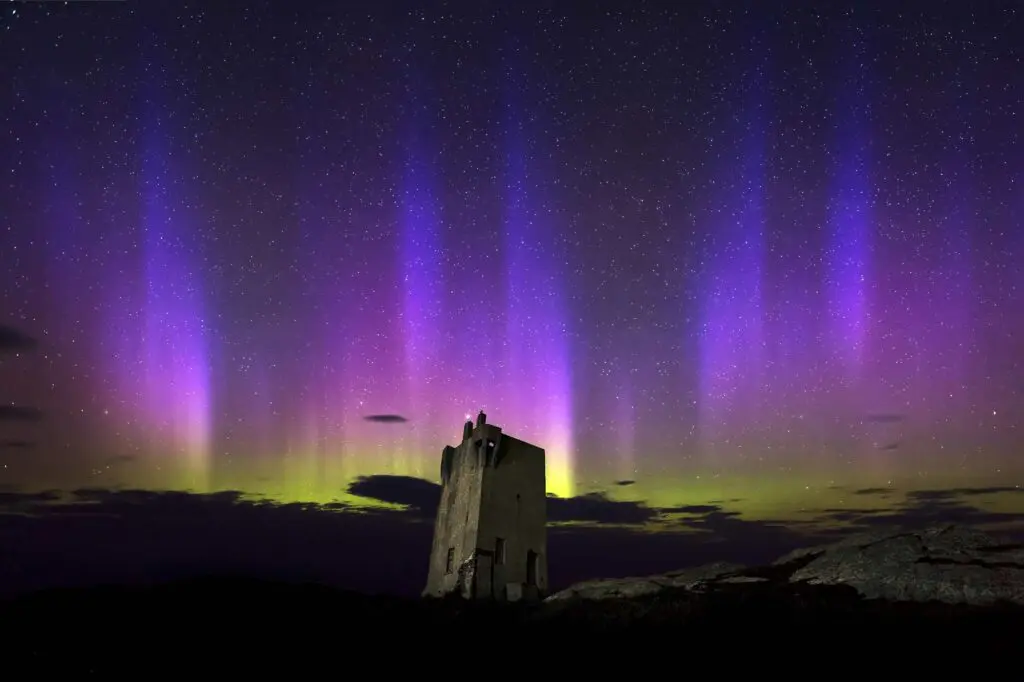
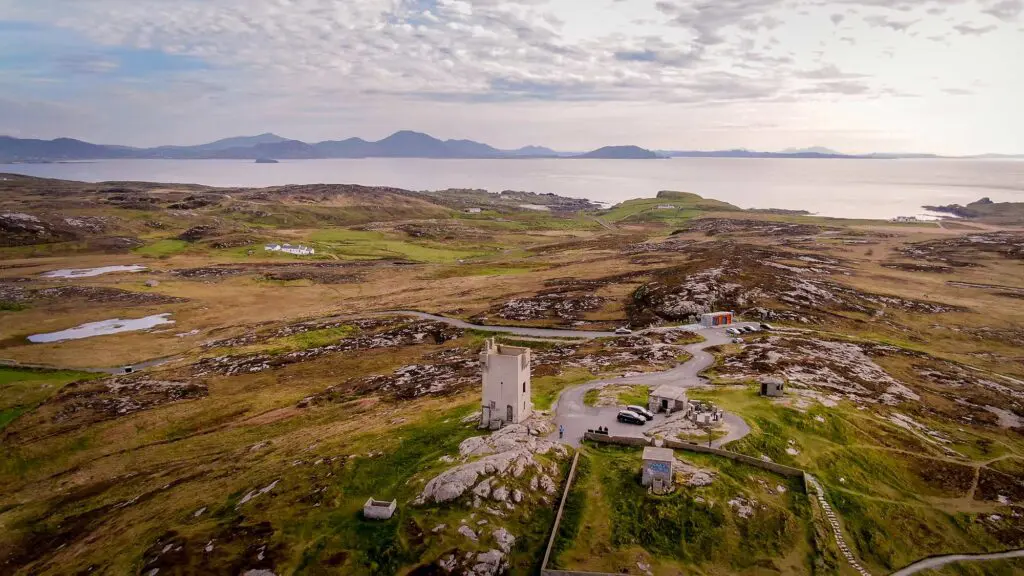
The modern tower that now stands on the headland was built in 1902 by the British Admiralty as a naval signal station. During both World Wars, the site served as a crucial coastal lookout, keeping watch over the North Atlantic and monitoring transatlantic shipping routes.
In the 1940s, Irish Defence Forces used the site as a surveillance post, and the word Éire was laid out in large white stones on the headland to alert Allied pilots that they were flying over neutral territory. This marker, still visible today, is one of the few surviving signs of Ireland’s careful position during a time of global conflict.
Banba’s Crown also holds a key place in the history of communication. In the early 20th century, the site hosted Ireland’s first Marconi wireless radio station — a pioneering effort in long-distance communication across the Atlantic. Though the original structure no longer stands, its legacy remains. Here, among the cliffs and sea air, the modern world was beginning to find its voice.
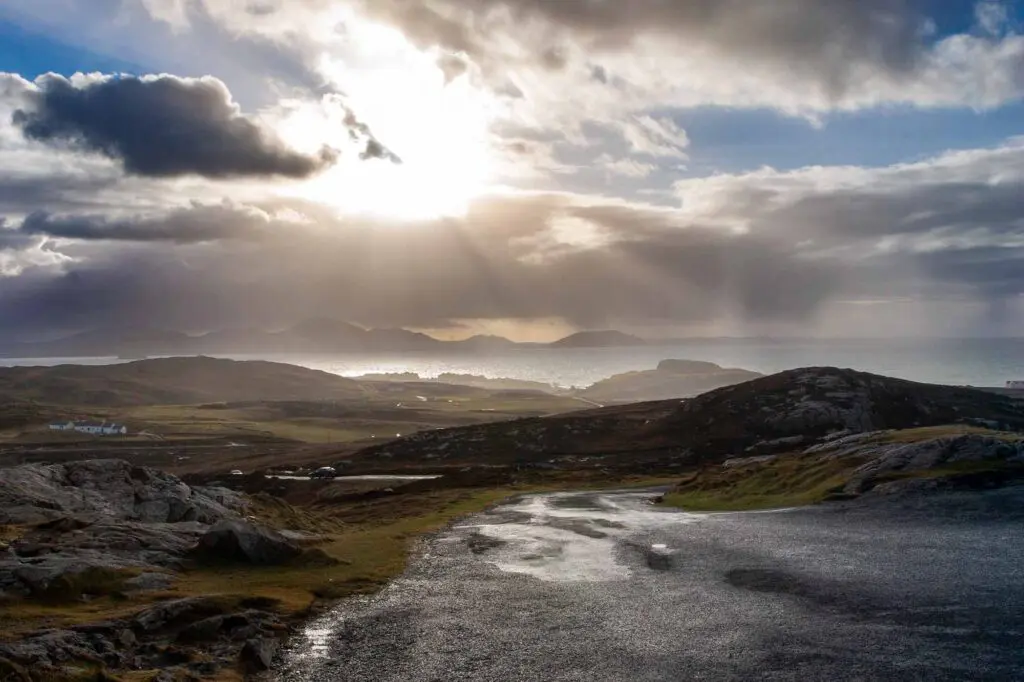
From Banba’s Crown, the views stretch wide in every direction. On clear days, you can see the rugged outlines of Inishtrahull Island to the northeast and even the distant hills of Scotland. The cliffs below drop steeply into crashing waves, and seabirds wheel overhead, riding the Atlantic winds. The coastline curves dramatically, shaped by millennia of weather and tide.
Interpretive panels on site offer insights into the history and geology of the area, and a short walking loop provides visitors with a full view of the headland from every angle. The car park sits just below the tower, and while the wind here is almost constant, so is the sense of scale and openness.
Banba’s Crown is more than just a geographical point — it’s a place that holds the weight of Ireland’s stories, both ancient and modern. From early myths to wartime watch posts, from the first radio signals to today’s quiet visitors with cameras and walking sticks, the site continues to connect people to the wider world — and to something deeper within.
A selection of our pics

Located close to Carndonagh and central to Inishowen, our traditional Irish cottage offers a peaceful, private stay in one of Donegal’s most scenic regions.