Written By:
Sinéad SmythUpdated on:
A striking monument to Inishowen’s prehistoric past just outside Culdaff
View all placesTucked quietly into the rolling pastureland near Culdaff, Bocan Stone Circle is one of Inishowen’s most significant and visually impressive prehistoric sites. With its broad diameter, weathered standing stones, and peaceful rural setting, the circle offers a rare and powerful connection to a time when this landscape was shaped not by maps or borders, but by ritual, astronomy, and community.
Thought to be over 4,000 years old, it remains a compelling reminder of the region’s deep and mysterious past.
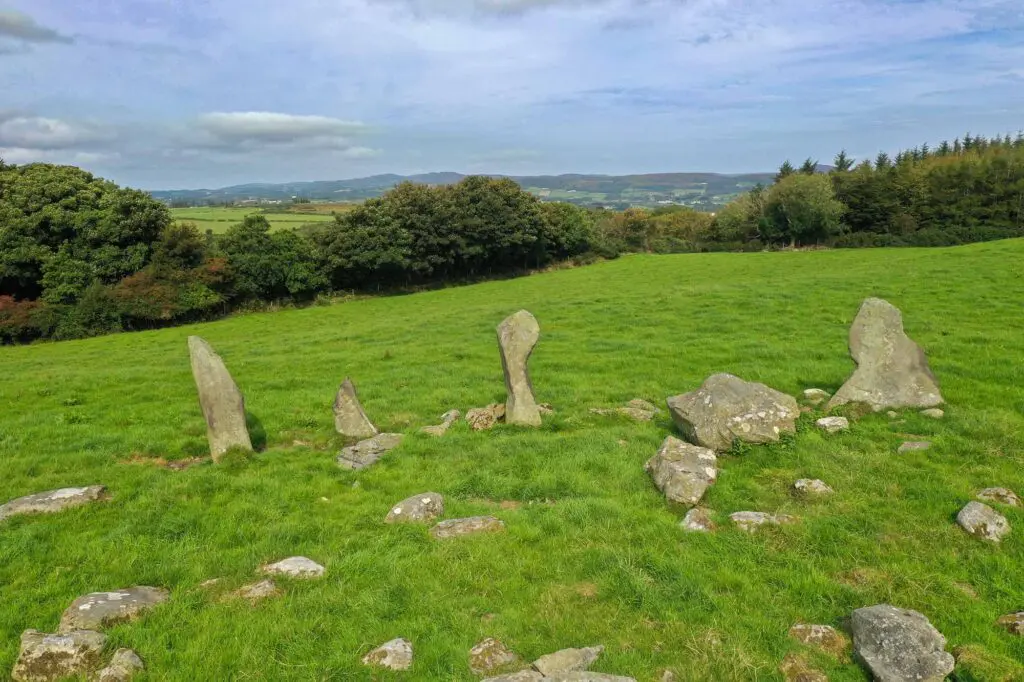
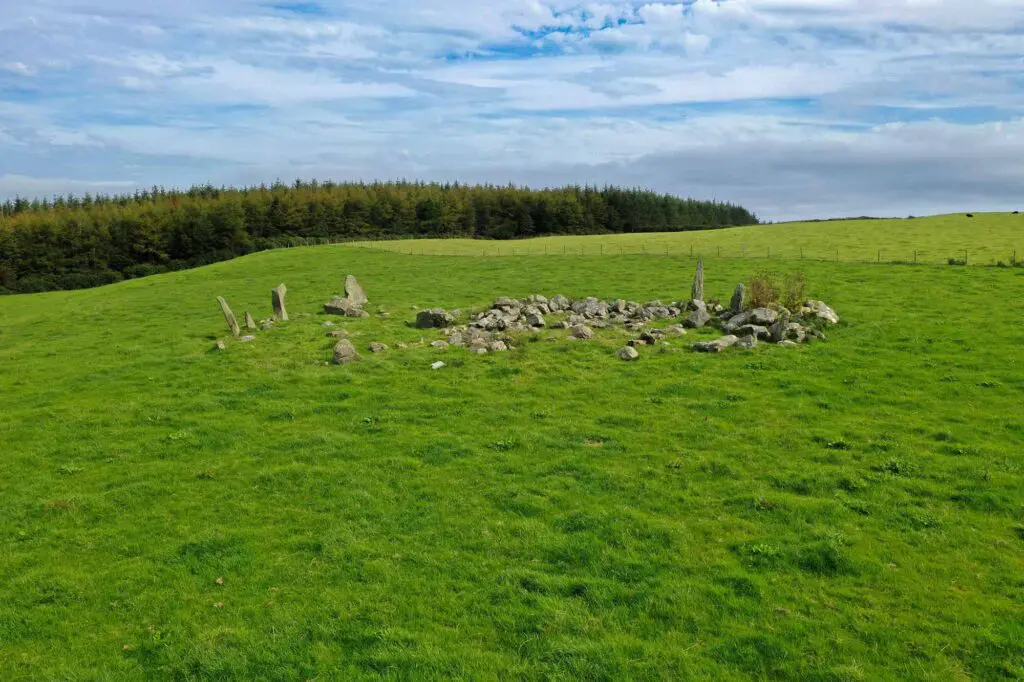
Located near St. Mary’s Church Bocan, just outside the village of Culdaff, Bocan Stone Circle occupies a gentle slope overlooking surrounding farmland. The site originally consisted of 30 standing stones, carefully arranged in a wide circular formation between 65 and 75 feet in diameter. Today, 12 of these stones remain upright, including several orthostats that stand over six feet high, giving the site both scale and presence.
Like many megalithic monuments in Ireland, the purpose of the circle is still a subject of research and interpretation. Archaeologists believe it was used for ceremonial or astronomical functions, possibly aligned with seasonal events such as solstices or equinoxes. It may also have served as a gathering place for ritual, community decisions, or burial practices, reflecting a time when landscape, sky, and human life were deeply interconnected.
Dating back to the Neolithic or early Bronze Age, Bocan Stone Circle predates many of the world’s best-known ancient landmarks, including the Egyptian pyramids. While exact dating remains uncertain without further excavation, the size and layout of the circle place it among a network of megalithic structures across Ireland that point to an advanced understanding of geometry, celestial patterns, and shared spiritual beliefs.
Standing among the stones, visitors often describe a sense of stillness — as though time itself has paused here. Each stone, shaped and placed by hand, would have held meaning for those who built it. The survival of the site over thousands of years is a testament not only to the craftsmanship involved, but to the reverence later generations had for what their ancestors left behind.
Bocan Stone Circle is easily reached from Culdaff, with St. Mary’s Church Bocan serving as a useful landmark for finding the site. It lies on private pastureland, so respectful access is essential, and visitors are advised to view the site with care, especially in wet conditions when the ground may be soft.
The surroundings are serene — open fields, distant hills, and the soft sound of wind moving through the grass. It’s not hard to imagine why this site would have been chosen as a sacred space. The isolation enhances the experience, giving visitors time to absorb the significance of the stones and the landscape they’ve stood in for millennia.
While not as well-known as some of Ireland’s larger stone circles, Bocan is a vital part of Inishowen’s archaeological heritage. It complements nearby prehistoric sites like the Isle of Doagh’s rock art, the Giant Stone in Muff, and Grianán of Aileach — each contributing to a deeper understanding of ancient life on the peninsula.
For those interested in megalithic history, early ritual landscapes, or simply a peaceful and thought-provoking stop in the countryside, Bocan Stone Circle offers an unforgettable experience. It is a place to reflect, to wonder, and to feel — however briefly — connected to something far older than memory.
A selection of our pics



Located close to Carndonagh and central to Inishowen, our traditional Irish cottage offers a peaceful, private stay in one of Donegal’s most scenic regions.