Written By:
Sinéad SmythUpdated on:

Explore a sacred landscape where saints, scholars, and Scottish legends meet
View all placesJust three kilometres from Culdaff, nestled in a quiet stretch of the Inishowen countryside, lies Clonca, one of the peninsula’s most historically significant early Christian sites. Established in the 6th century by St. Morialagh, Clonca became a key centre for monastic life and religious learning, playing a pivotal role in the spread of Christianity across Inishowen.
Today, the site may be quiet and unassuming, but it remains a deeply resonant space — one that connects faith, history, and a shared cultural heritage that stretches across the sea to Scotland and beyond.
Clonca’s foundation came during a time of rapid religious transformation in Ireland. Following the missionary influence of St. Colmcille and his disciples, monastic settlements sprang up throughout the island. Clonca was among the most influential in the northwest, serving not just as a religious site but as a centre of education and governance, guiding the spiritual and social life of the surrounding communities.
As with many monastic settlements, Clonca would have included wooden and stone structures, a central church, surrounding dwellings for monks, and farmland worked in support of the community. Its strategic location, along known travel and pilgrimage routes, helped it flourish as both a sacred destination and a beacon of learning in early medieval Ireland.
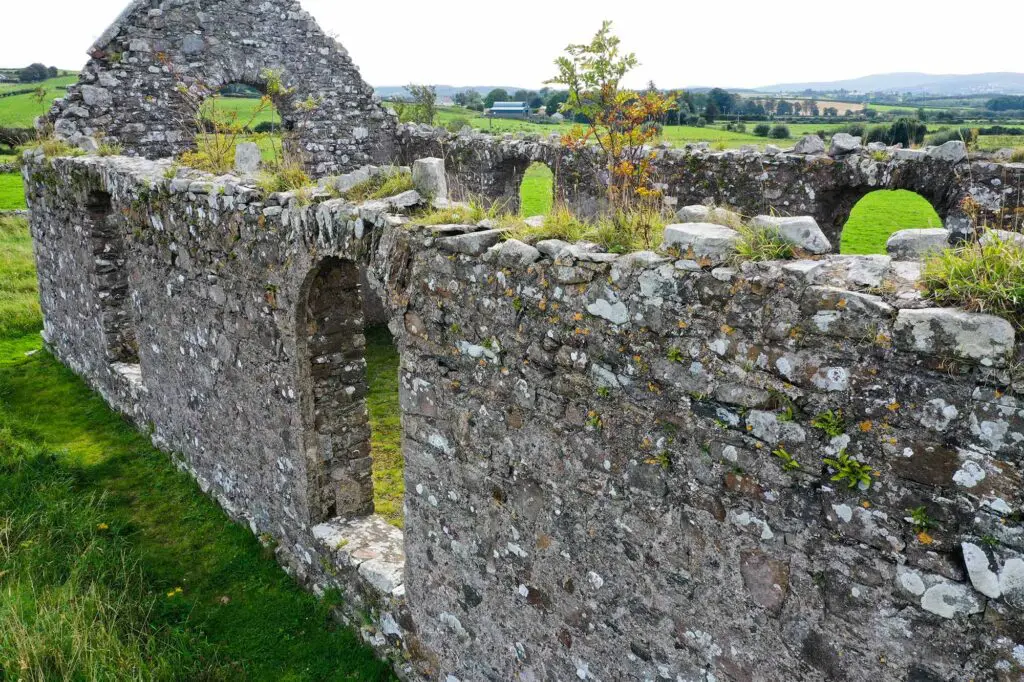
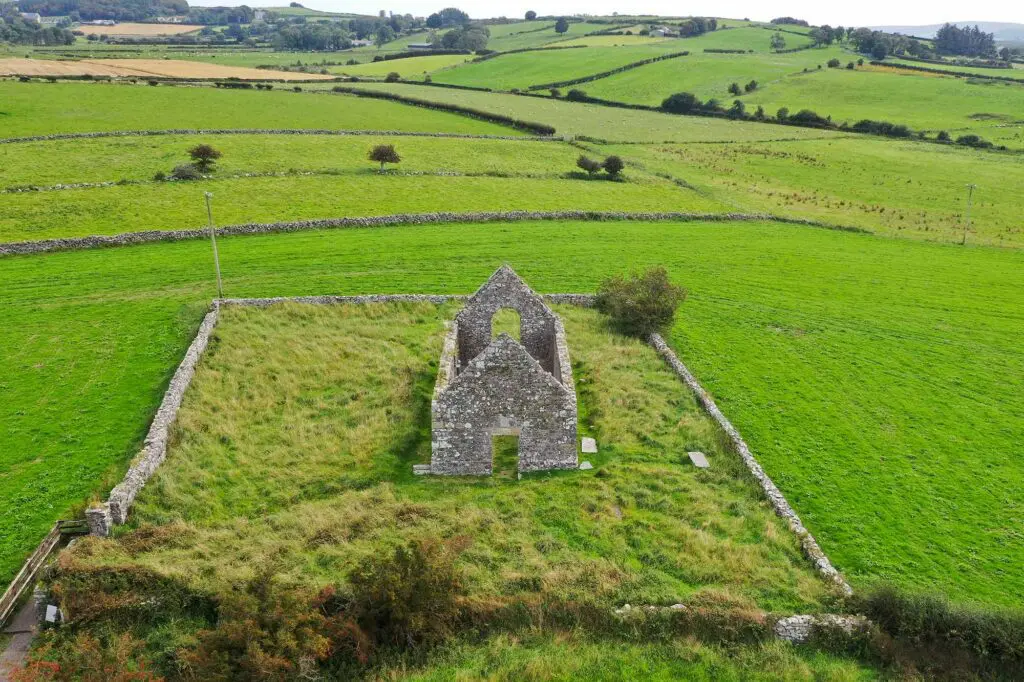
By the 17th century, the original monastic buildings had largely vanished, though their foundations remained. A planter’s church — typical of the post-medieval period following the Ulster Plantation — was built directly on the site, using parts of the earlier stonework and possibly replicating its footprint. The structure now lies in ruins, but enough survives to hint at its former prominence and to preserve its spiritual atmosphere.
Visitors can still see the remnants of this stone church and its surrounding graveyard, where a number of important historical figures are buried, including Father Sheridan, who served as chaplain to Bonnie Prince Charles, and Bishop McColgan, who led the local diocese from 1752 to 1765. These burials link Clonca not only to early Christian history, but also to significant moments in 18th-century ecclesiastical and political life.
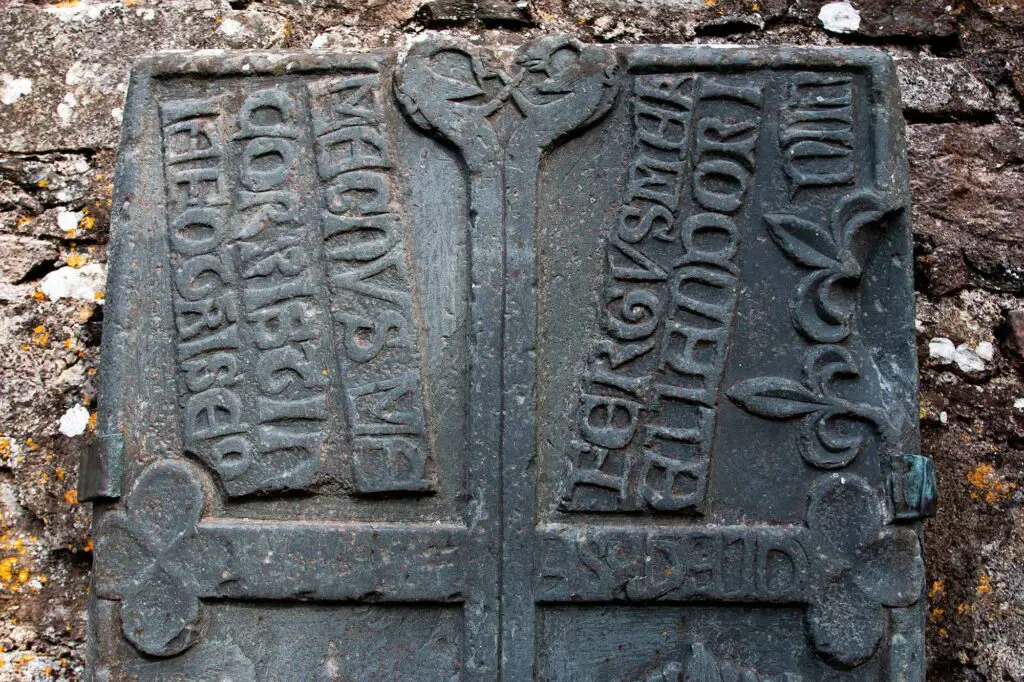
Among the most fascinating features at Clonca are the carved grave slabs within the ruined church. One slab bears an inscription referencing Magnus MacCorristin of the Isles, likely a figure of Scottish heritage — suggesting that the cultural exchanges between Inishowen and Scotland extended into the medieval and early modern periods.
Another slab shows a finely carved shinty stick and ball, a clear nod to Scottish tradition and further evidence of the close ties between Irish and Scottish monastic communities. A weathered lintel over the western doorway of the church also bears carvings of ecclesiastical figures, believed to pre-date the 17th-century structure itself — a visual echo from an earlier age of faith and craftsmanship.
Local tradition enriches the site’s significance with stories that stretch across the nearby landscape. One such tale recounts how monks once traversed the bogland between Clonca and Carrowmore, maintaining strong spiritual and physical connections between early monastic communities in the region. These stories, passed down through generations, continue to shape the identity of the land and lend a mystical character to Clonca’s quiet presence.
For visitors today, Clonca offers a chance to step away from the road and into a space shaped by centuries of devotion, resilience, and shared tradition. Surrounded by fields and sky, the site is a peaceful place to reflect on the people who lived, worshipped, taught, and were laid to rest here.
It’s not a grand monument, but something more personal — a place where layers of history are still visible in stone, in story, and in the landscape itself.
A selection of our pics


Located close to Carndonagh and central to Inishowen, our traditional Irish cottage offers a peaceful, private stay in one of Donegal’s most scenic regions.