Written By:
Sinéad SmythUpdated on:

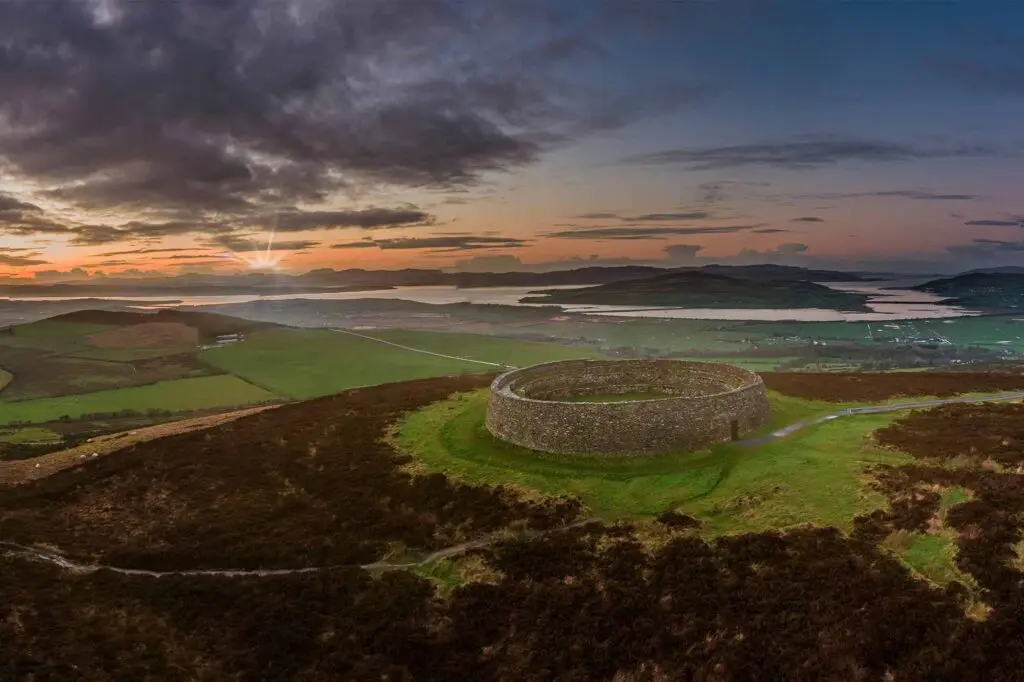
Royal stronghold looking down on Inishowen
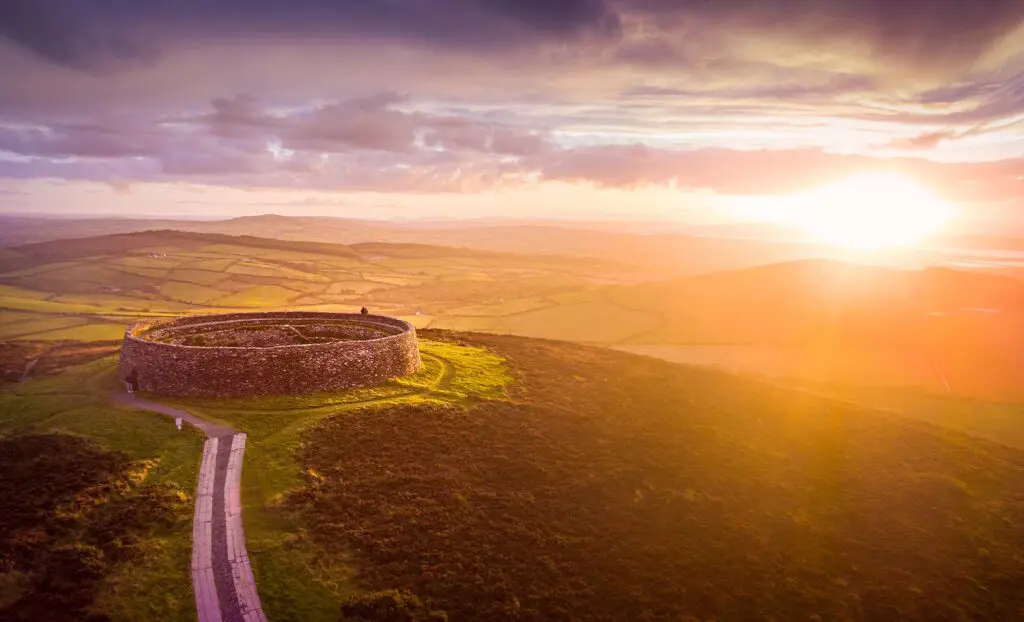
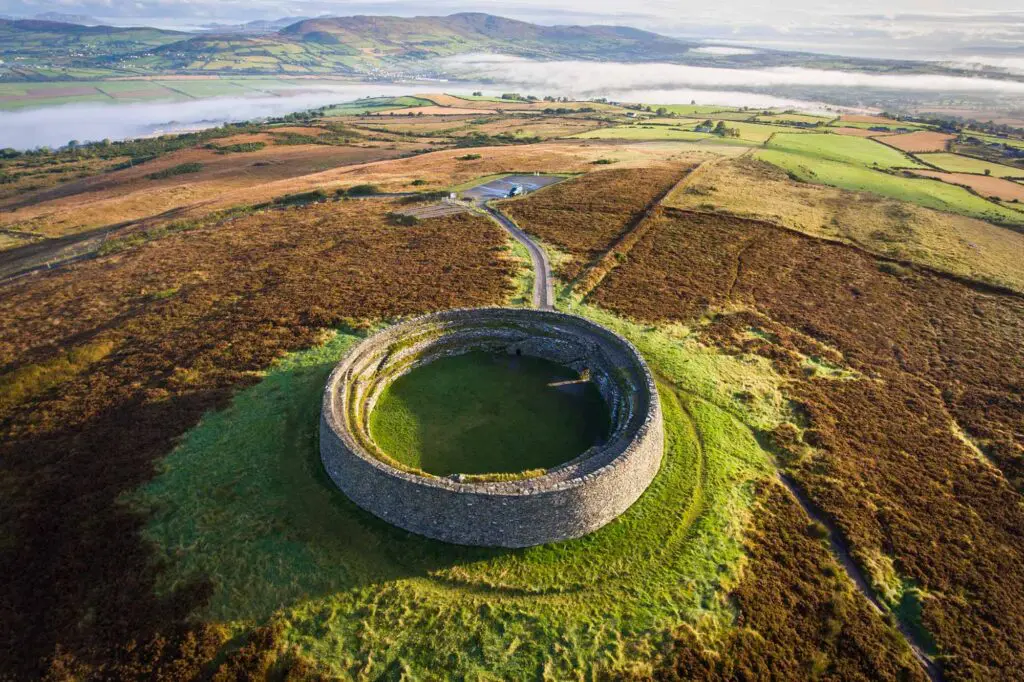
View all placesPerched high above the surrounding landscape at over 800 feet, Grianán of Aileach commands one of the most breathtaking views in Ireland.
From its stone walls, visitors can take in sweeping panoramas of Lough Swilly and Lough Foyle, Inch Island below, and—on clear days—portions of Donegal, Derry, Tyrone, and even Antrim.
But beyond the view lies something older, deeper, and more powerful: a place where ancient kings once ruled, ceremonies were held, and Ireland’s early history took shape.
Grianán of Aileach is best known today for its circular stone ringfort, likely constructed in the early medieval period by the Northern Uí Néill, one of the dominant Gaelic dynasties of the time. But archaeological evidence suggests that the site itself was in use much earlier — possibly as far back as the late Bronze Age or Iron Age.
The name Grianán translates loosely to “sunny place” or “stone palace,” and the site has long been associated with royalty and ritual. As the ceremonial seat of the Kingdom of Aileach, it was one of the most important centres of power in Gaelic Ireland, drawing influence across Ulster and beyond.
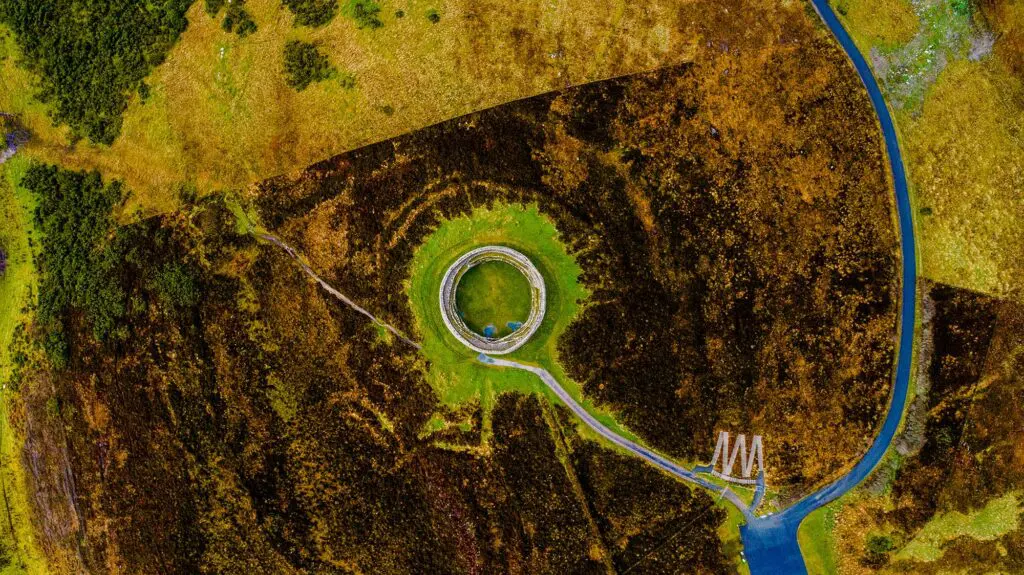
The stone fort that still stands today is a testament to the ingenuity and endurance of early Irish builders. The circular wall measures approximately 4.5 metres thick and rises to about 5 metres high, enclosing a spacious inner area that once housed wooden structures — possibly homes, storage buildings, or ceremonial halls.
Inside, three stone terraces are built into the inner face of the wall, linked by narrow staircases that allow visitors to walk along the top and take in the full panorama. Two long passageways run through the thickness of the wall itself, adding to both the defensive and practical function of the design. Outside the main ring, remnants of a tumulus and a well suggest earlier ritual or settlement activity on the site.
By the 12th century, the Kingdom of Aileach faced increasing pressure from Norman expansion, and the fort’s influence began to wane. In 1101, Muirchertach Ua Briain, King of Munster, is said to have led a campaign north and partially destroyed the fort — a symbolic act intended to weaken the Northern Uí Néill.
The ruins remained weathered and broken for centuries until the late 19th century, when local historian Dr. Walter Bernard led significant restoration work. Though controversial by modern archaeological standards, his efforts helped preserve the structure and sparked renewed public interest in the site’s history and cultural value.
Today, Grianán of Aileach is one of the most visited heritage sites in Donegal. The climb to the summit is rewarded not only by the commanding views, but by the atmosphere — a sense of timelessness and stillness that draws both locals and visitors alike. Interpretive signage provides context, but much of what you take away from the site comes from simply standing inside its walls, feeling the wind, and imagining the generations who stood there before you.
A selection of our pics

Located close to Carndonagh and central to Inishowen, our traditional Irish cottage offers a peaceful, private stay in one of Donegal’s most scenic regions.